Reject
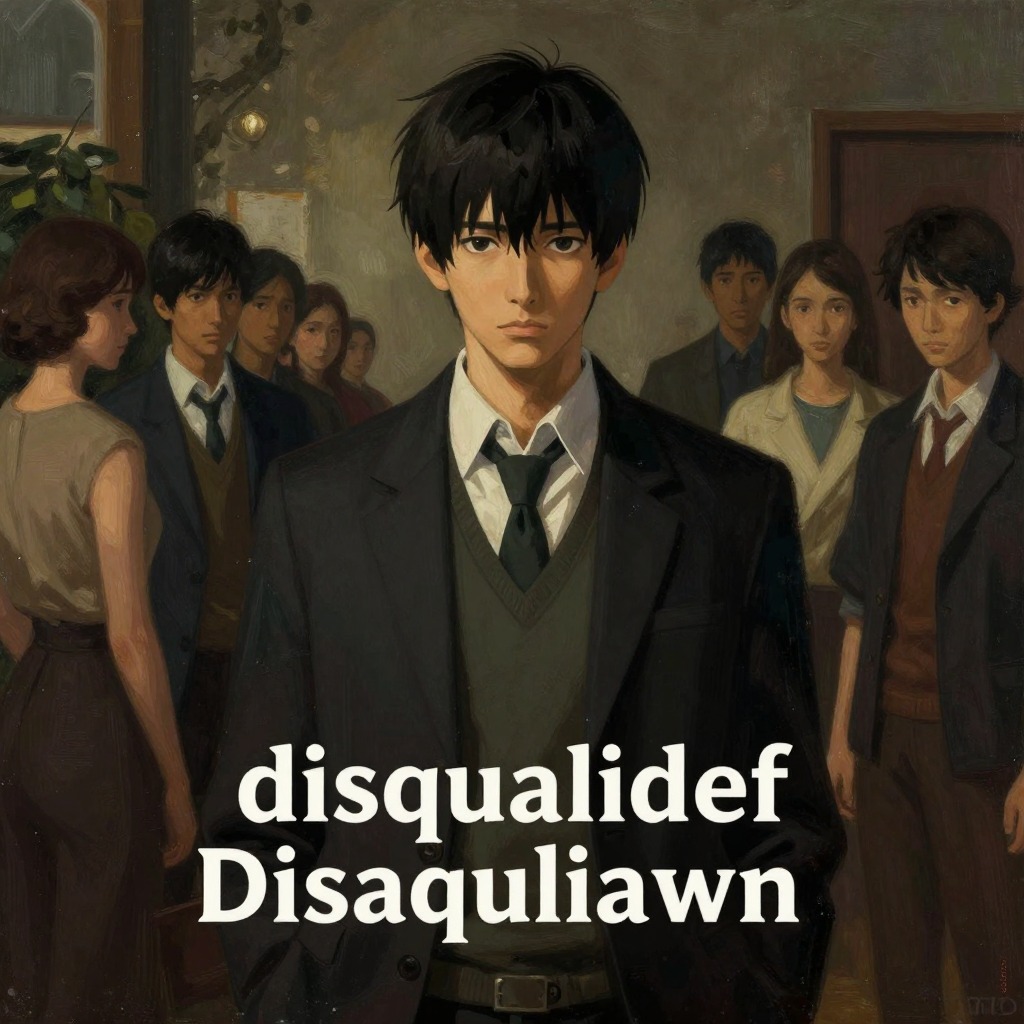
Reject is the terminal identity that Yozo assumes after his confinement in a mental hospital, a label that crystallizes his lifelong conviction that he has been been disqualified from human society and stripped of all belonging. It is the name he gives to the state of having ceased utterly to be a human being, a condition that follows from his inability to resist the forces that push him out of the world of ordinary people. The word appears in the notebooks as a stark self-diagnosis, but it is also confirmed by the actions of others: his family sends him away to a remote coastal village, his father's death severs the last formal tie to his former life, and the old servant who looks after him treats him with a mixture of contempt and familiarity. The Reject is not merely a social outcast but a person who has internalized his own exclusion so completely that he no longer expects or desires reintegration.
Origin and Definition
The term "Reject" first appears in the notebooks at the moment of Yozo's greatest humiliation. After being tricked into entering a mental hospital—he was told it was a sanatorium—he realizes that he has been branded forever. He writes, "Disqualified as a human being. I had now ceased utterly to be a human being" . The word "reject" follows immediately: "A reject, exactly" . The label is not imposed by a court or a medical board; it is the conclusion Yozo draws from the way he has been handled. His brother and Flatfish come to take him out of the hospital only after their father's death, and they tell him he must leave Tokyo and begin his convalescence in the country. They promise to support him financially and ask no questions about his past, but the condition is clear: he is to disappear from the life he knew. Yozo nods faintly, and the word "reject" echoes in his mind. The term thus names a state that is both imposed and accepted, a verdict that the world has passed and that Yozo himself ratifies.
The Social and Psychological Dimensions
Yozo's sense of being a reject has deep roots in his childhood. He writes that he has felt like a "social outcast" from the moment he was born . The clowning he invented as a child was a desperate strategy to win a place among human beings, but it was always a performance, a mask that concealed his terror. The maids and menservants corrupted him when he was small, and he endured the crime in silence because he could not imagine that complaining to his father or mother or the police would do any good . This early experience taught him that he stood outside the protections that ordinary people enjoy. The clowning was his "last quest for love" , but it never brought him inside the circle of human trust. By the time he is an adult, he has accumulated a series of failures—the suicide attempt with Tsuneko, the expulsion from college, the morphine addiction, the violation of his wife Yoshiko—that confirm his belief that he is fundamentally different from others. The Reject is the name he gives to this accumulated difference.
The Physical and Bodily Signs
The state of being a reject is written on Yozo's body. His hair turns prematurely grey after the night he discovers Yoshiko's violation, and by the time he is twenty-seven most people take him for over forty . He coughs blood, vomits in the snow, and loses weight noticeably after the Dial overdose . The old servant Tetsu, who looks after him in the coastal village, is described as an ugly woman with horrible rusty hair, and she violates him in a curious manner . The body of the reject is not only aging and diseased but also subject to indignities that would be unthinkable for a person who still belonged to the human community. When Yozo takes a laxative by mistake, thinking it is a sleeping pill, he laughs at the absurdity and thinks, "I think 'reject' must be a comic noun" . The joke is bitter: even his attempts at self-destruction are botched, and the only truth he can hold onto is that "everything passes" .
The Narrative Frame and the Epilogue's Reversal
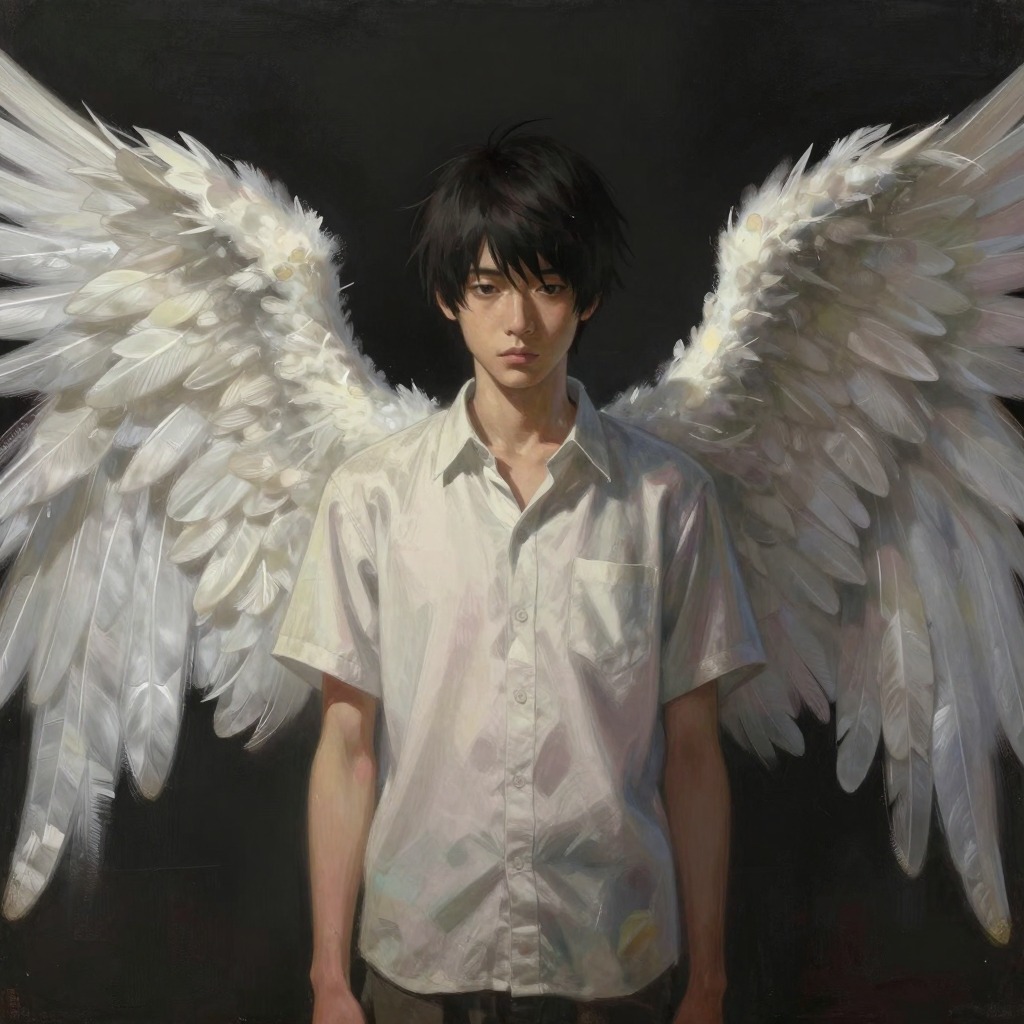
The notebooks themselves are framed by an epilogue in which the Madam of the Kyobashi bar tells the unnamed narrator that Yozo was "a good boy, an angel" . This judgment stands in stark contrast to Yozo's own self-portrait as a reject. The narrator, who has read the notebooks, notes that Yozo's experiences are not typical of all Japanese intellectuals but that the sense of isolation they feel is akin to Yozo's conviction that he alone is not human . The epilogue does not cancel the label of reject; it adds a layer of irony. The reader is left to decide whether Yozo's self-assessment is accurate or whether he has been too harsh on himself. But the notebooks themselves end with Yozo in the coastal village, neither happy nor unhappy, waiting for nothing. The state of being a reject is not a dramatic tragedy but a quiet, ongoing condition in which the sufferer has lost even the ability to suffer.
Thematic Significance
The concept of the Reject is central to the novel's exploration of what it means to be human. Yozo's entire life is a series of attempts to qualify for membership in the human race, and each attempt fails. The clowning, the painting, the political activism, the love affairs, the marriage—all of them end in disaster or shame. The Reject is the final category, the one that cannot be escaped because it is not a social role but a verdict on the self. The novel does not offer a resolution or a redemption; it simply records the process by which a person becomes convinced that he is unfit for human society. The epilogue's suggestion that Yozo was an angel does not contradict this verdict so much as complicate it, implying that the qualities that made him a reject—his gentleness, his inability to resist, his trust in others—are also the qualities that made him lovable. The Reject, in the end, is not a monster but a person who could not learn the rules of the game.